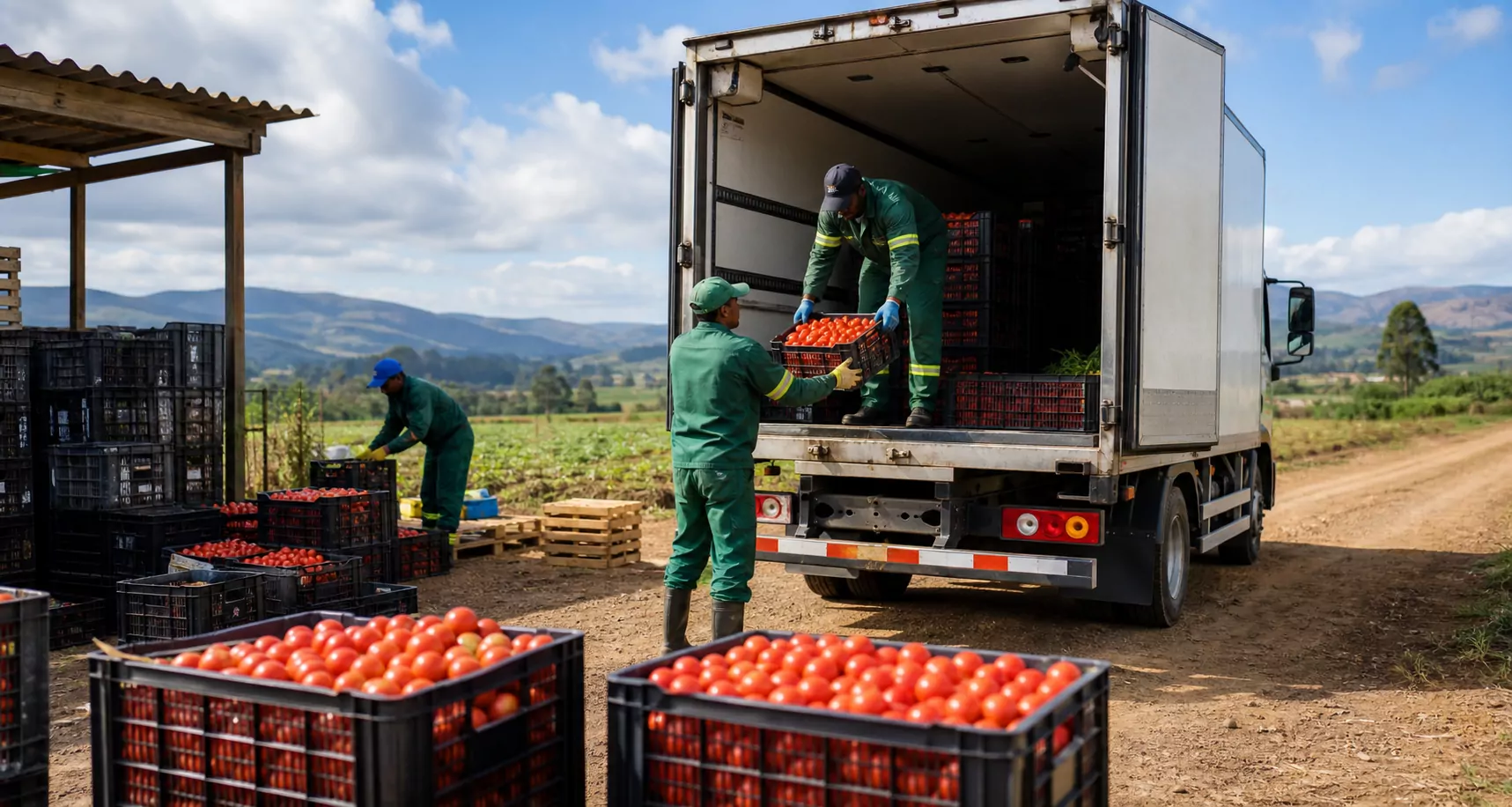
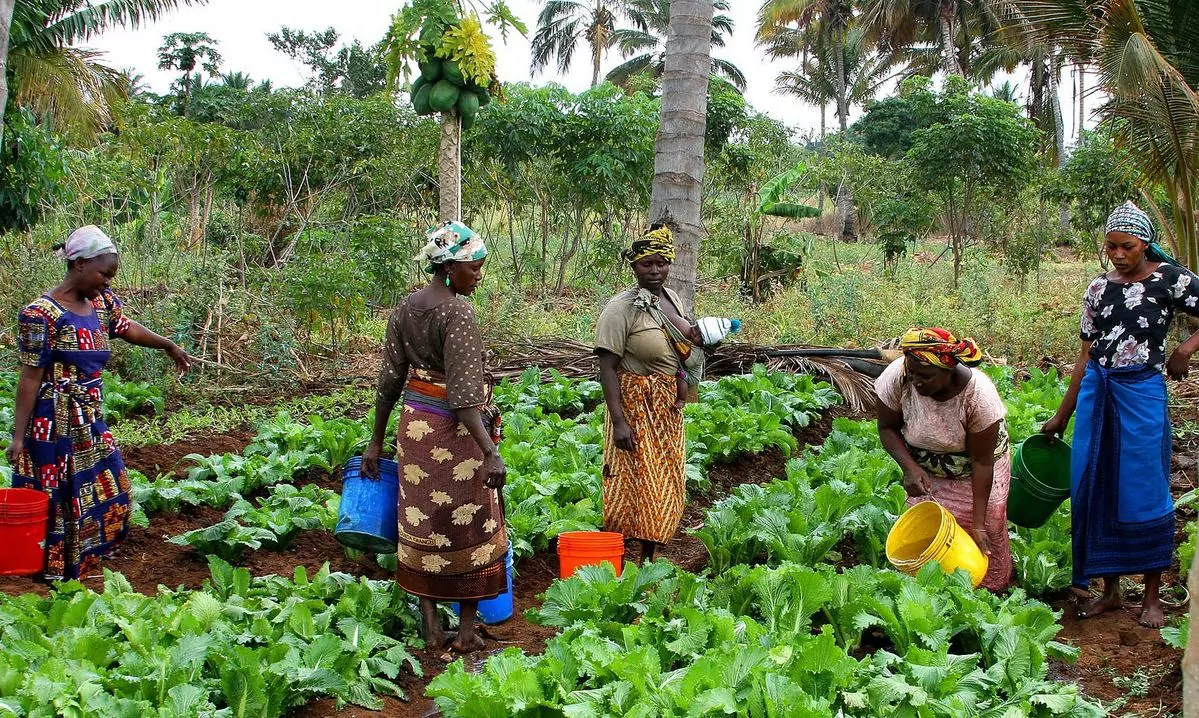
FreshLink Report your harvest before it's picked. Match every crate to a truck and a cold hub. Beat the 34.7% post-harvest loss.

34.7%tomato loss after harvest in Kamonyi
18.4%lost at the farm alone
1–3 daysshelf life under poor handling
5 tonnesMunyax-Eco cold room in Kamonyi

The Problem

Losses pile up when no one coordinates.

Tomatoes spoil fast, but harvest, transport and storage are arranged separately — through scattered calls and guesswork.

Harvest before a plan

Tomatoes are picked before transport or storage is confirmed, so they sit and over-ripen.
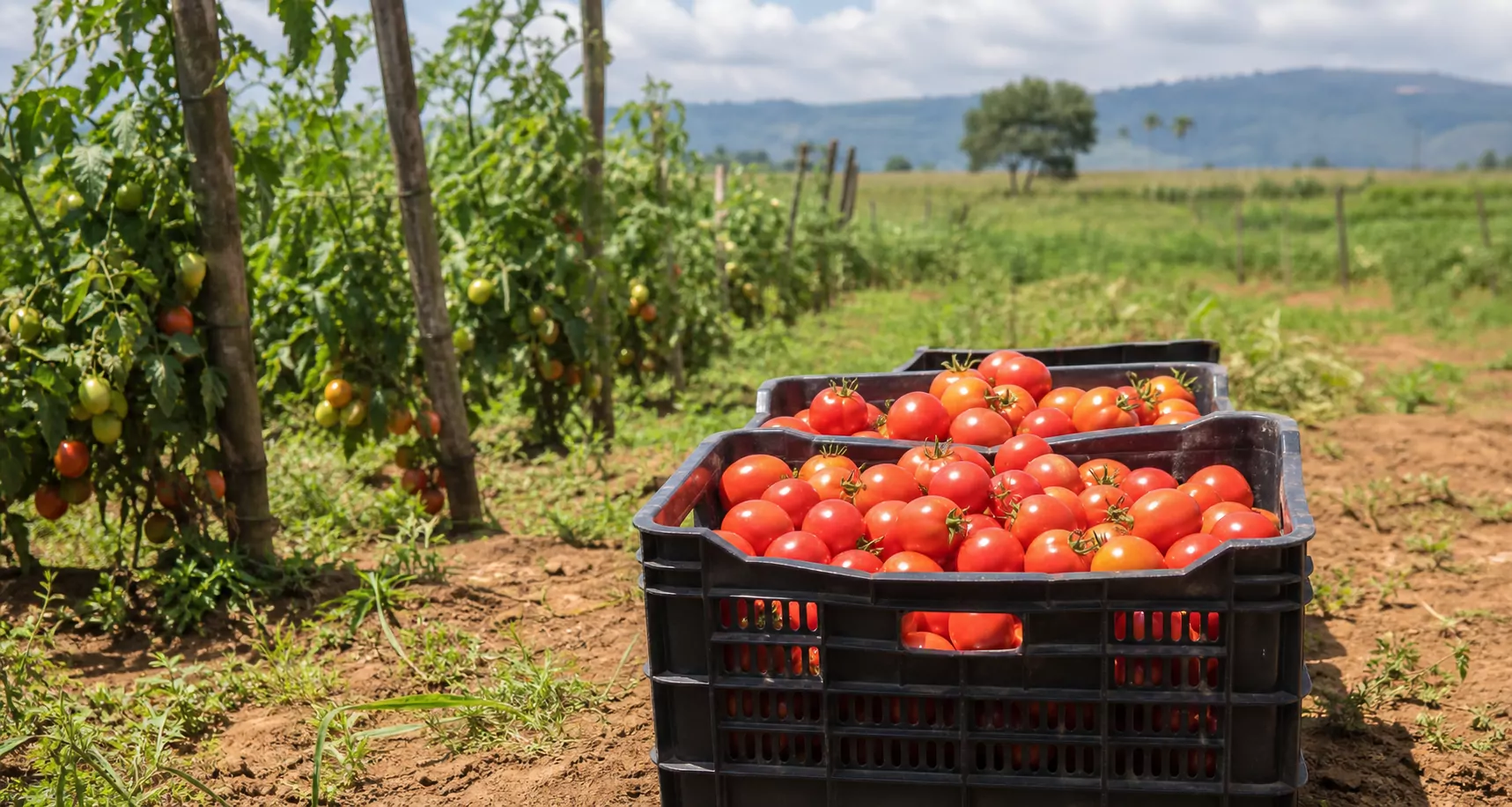
Transport not grouped

Separate calls mean half-empty trips, missed pickup windows, and damage from overloading.

Storage no one can see

Cold-room space fills up, and no one knows in time whether a hub can take the load.

How it works

Four steps, every two hours.

FreshLink runs on a schedule — like a bus timetable. Farmers report into it; the engine coordinates what's waiting.

  1. 01

    Farmers report by USSD

    A farmer dials a short code and reports the tomato quantity, harvest date and location — in English or Kinyarwanda. No smartphone, no app, no data bundle needed.

    • USSD menu
    • Update or cancel anytime
    • Saved as a pending harvest
  2. 02

    Hubs and trucks stay current

    Cold-hub operators post the storage they actually have free; transporters post available trucks and capacity. The system plans against real numbers, not assumptions.

    • Live storage capacity
    • Truck availability
    • Operator-controlled
  3. 03

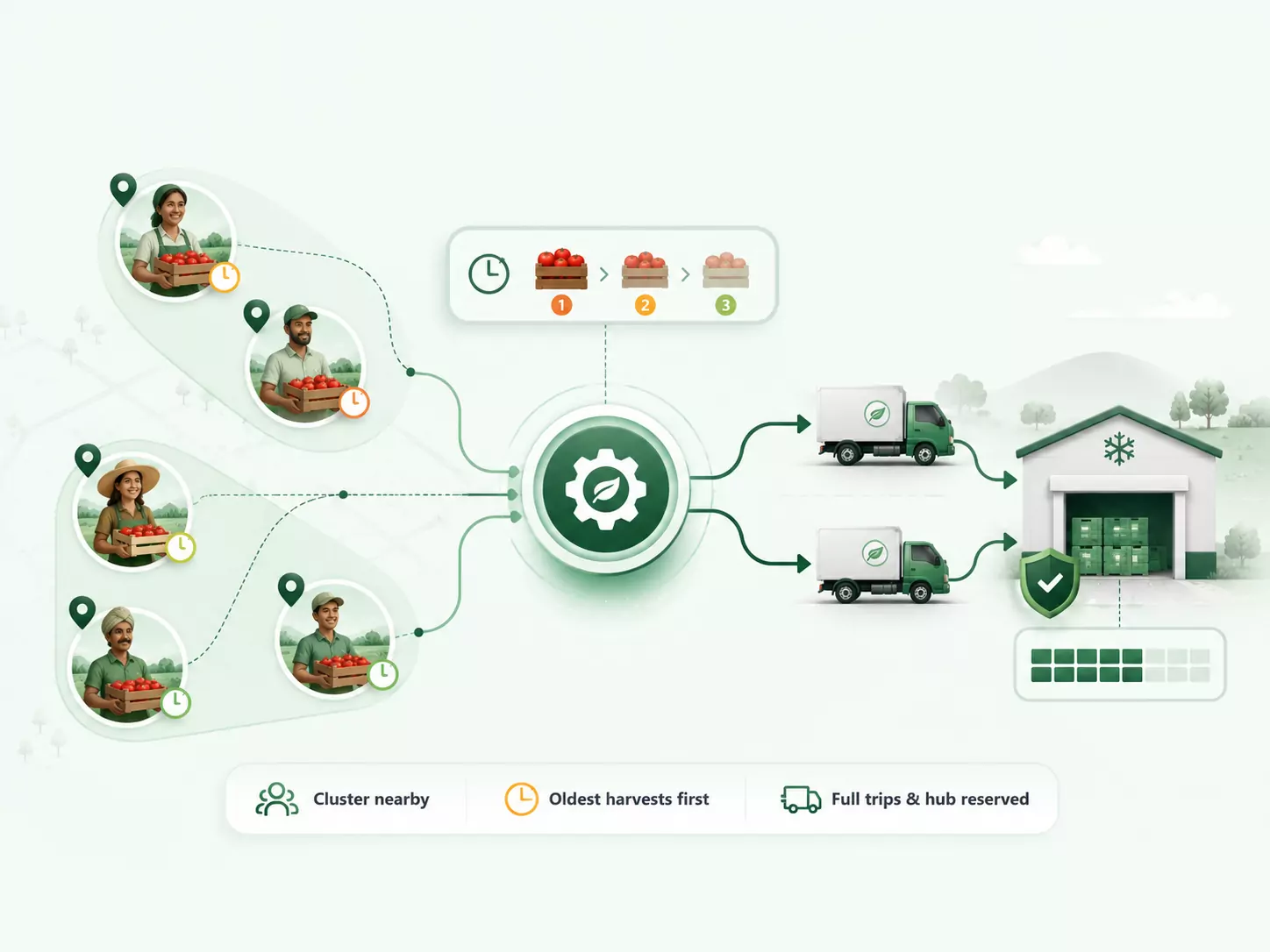
    The engine matches and groups

    Every two hours the coordination engine reads pending harvests oldest-first, groups nearby farmers, and matches each group to a truck with room and a hub with space — or logs why it couldn't.

    • Oldest harvest first
    • Grouped pickups
    • Truck + hub reserved
  4. 04

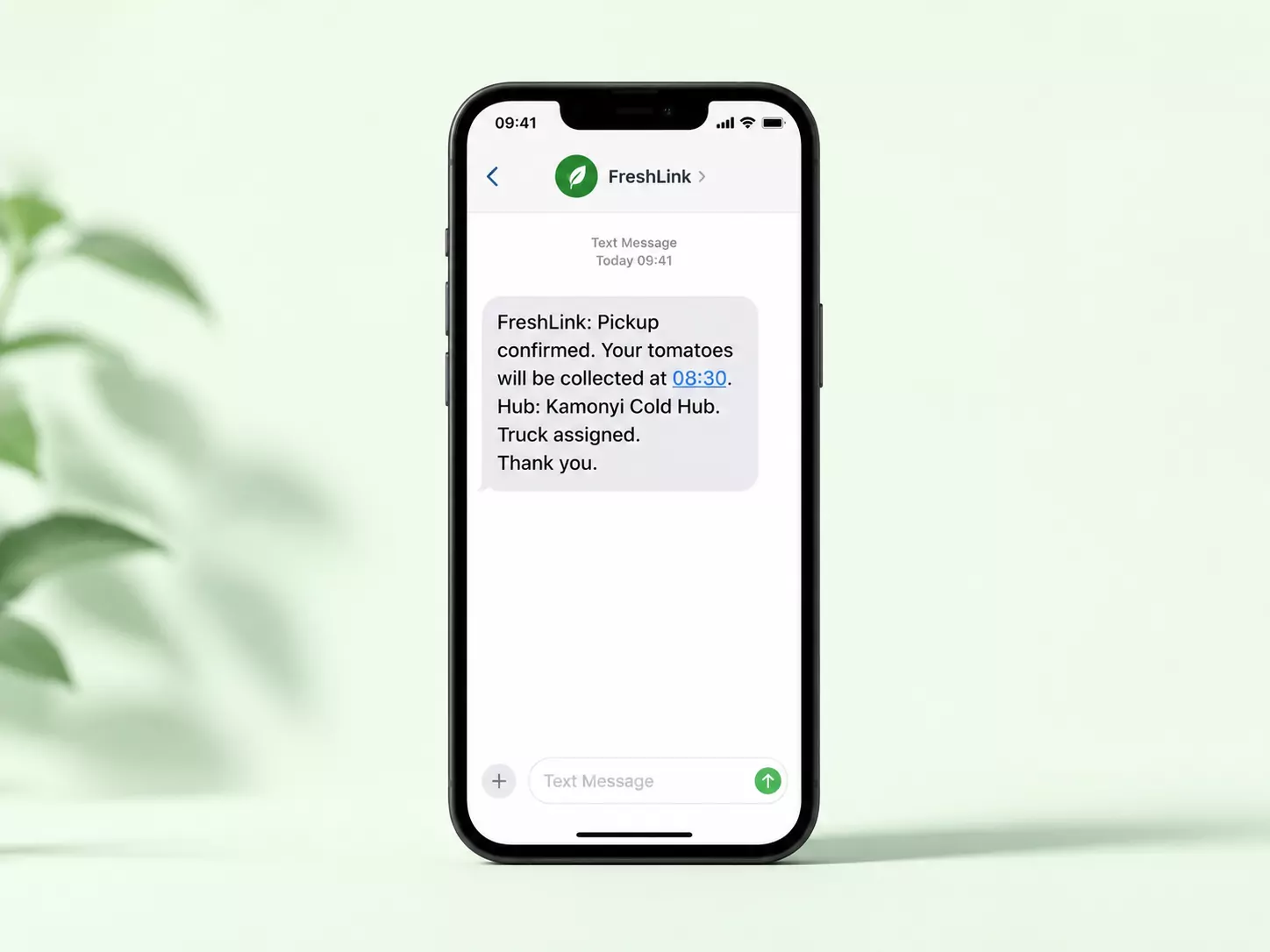
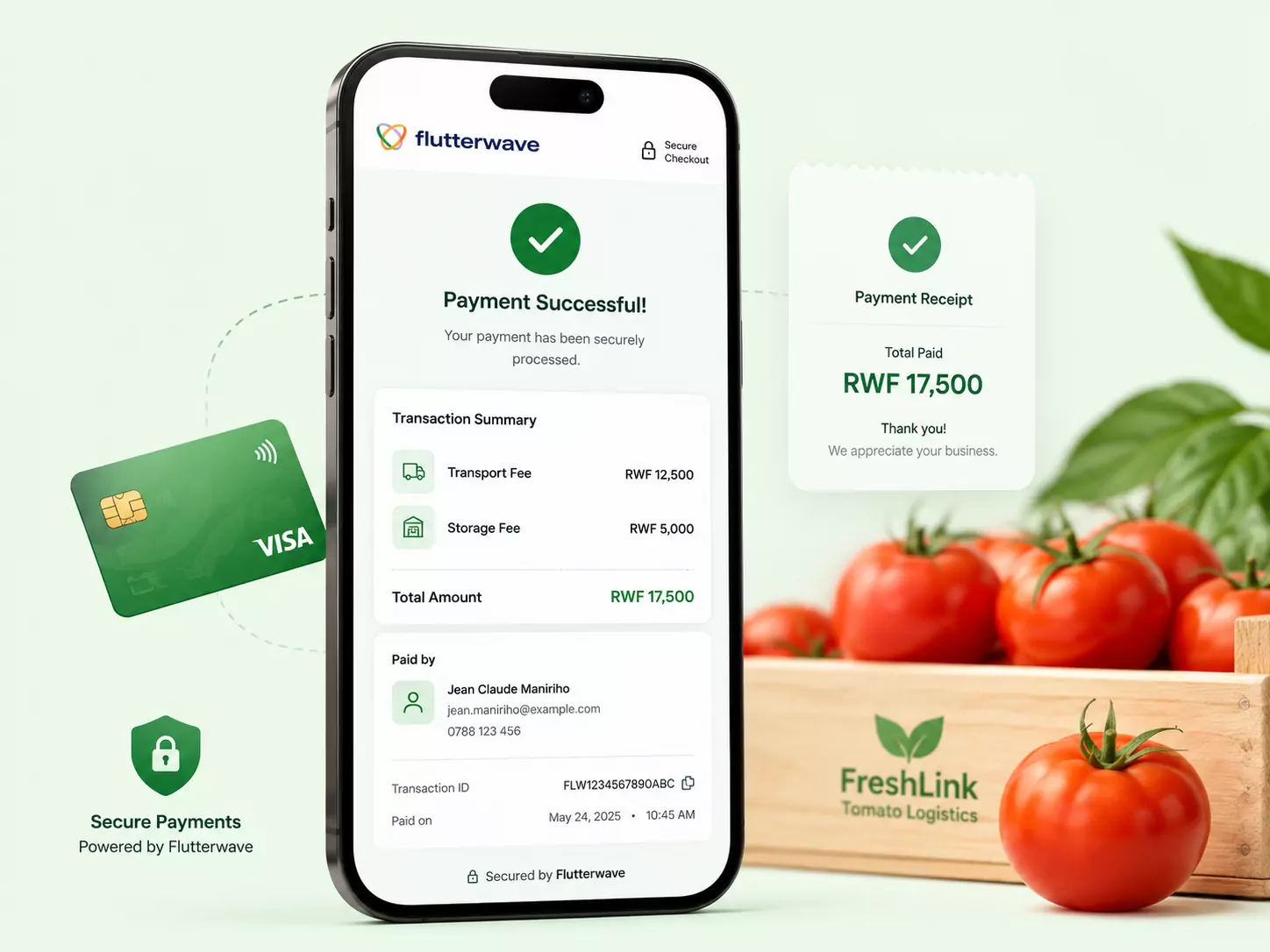
    Notify by SMS, settle by Flutterwave

    Farmers get an SMS confirming the pickup; operators see it on their dashboards. When a trip is created, the farmer's payment to the transporter and the hub is settled through Flutterwave.

    • SMS confirmation
    • Flutterwave payment
    • Nothing lost, nothing manual

Features

Everything the tomato cold-chain needs.

Built on the tech stack that runs the platform — scroll through each capability.
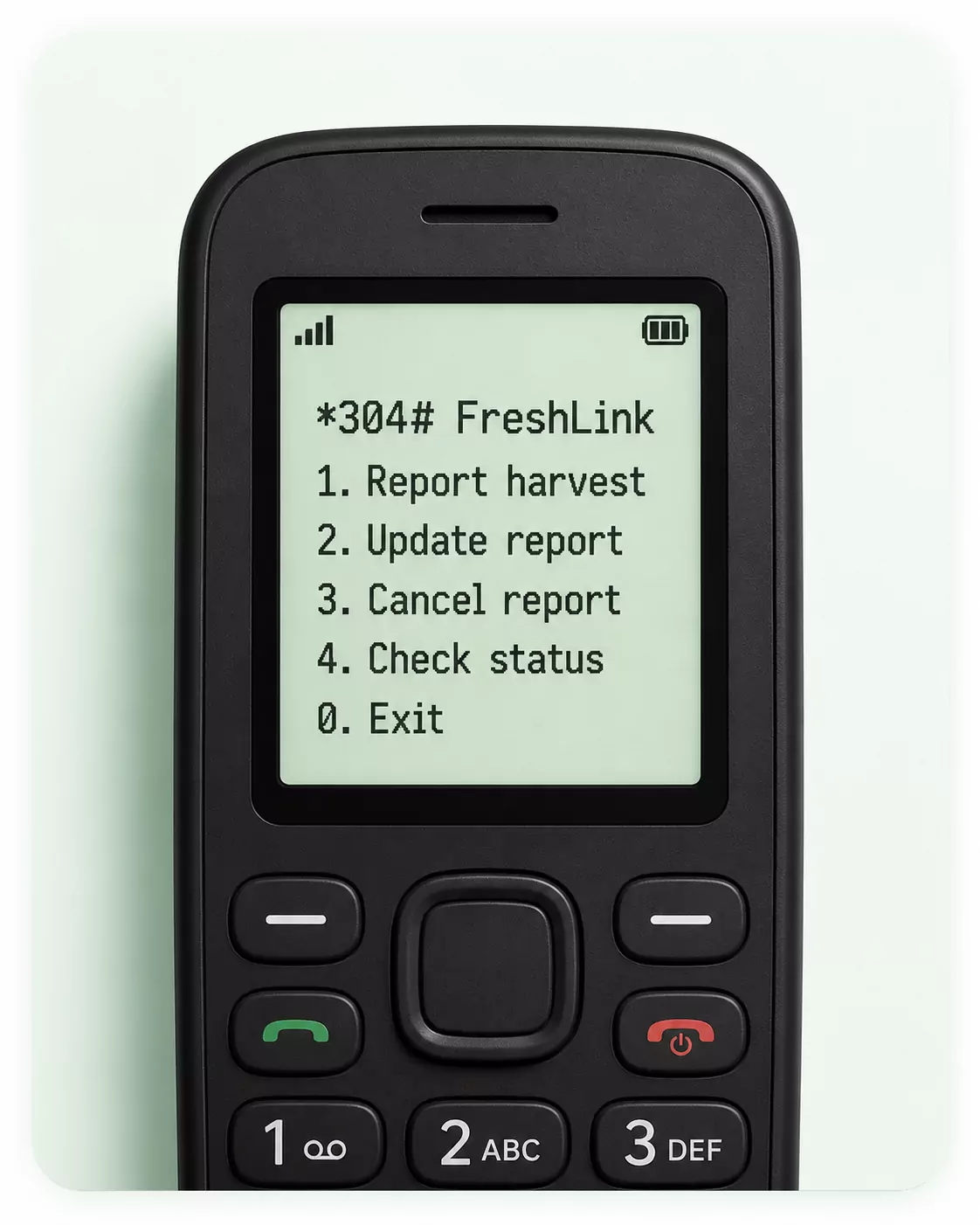
USSD harvest reporting on a basic phone
Africa's Talking · USSD

USSD harvest reporting

Farmers report, update, or cancel a harvest from any basic phone — the input that starts every coordination run.
  • Any phone
  • 2 languages
  • Starts the engine
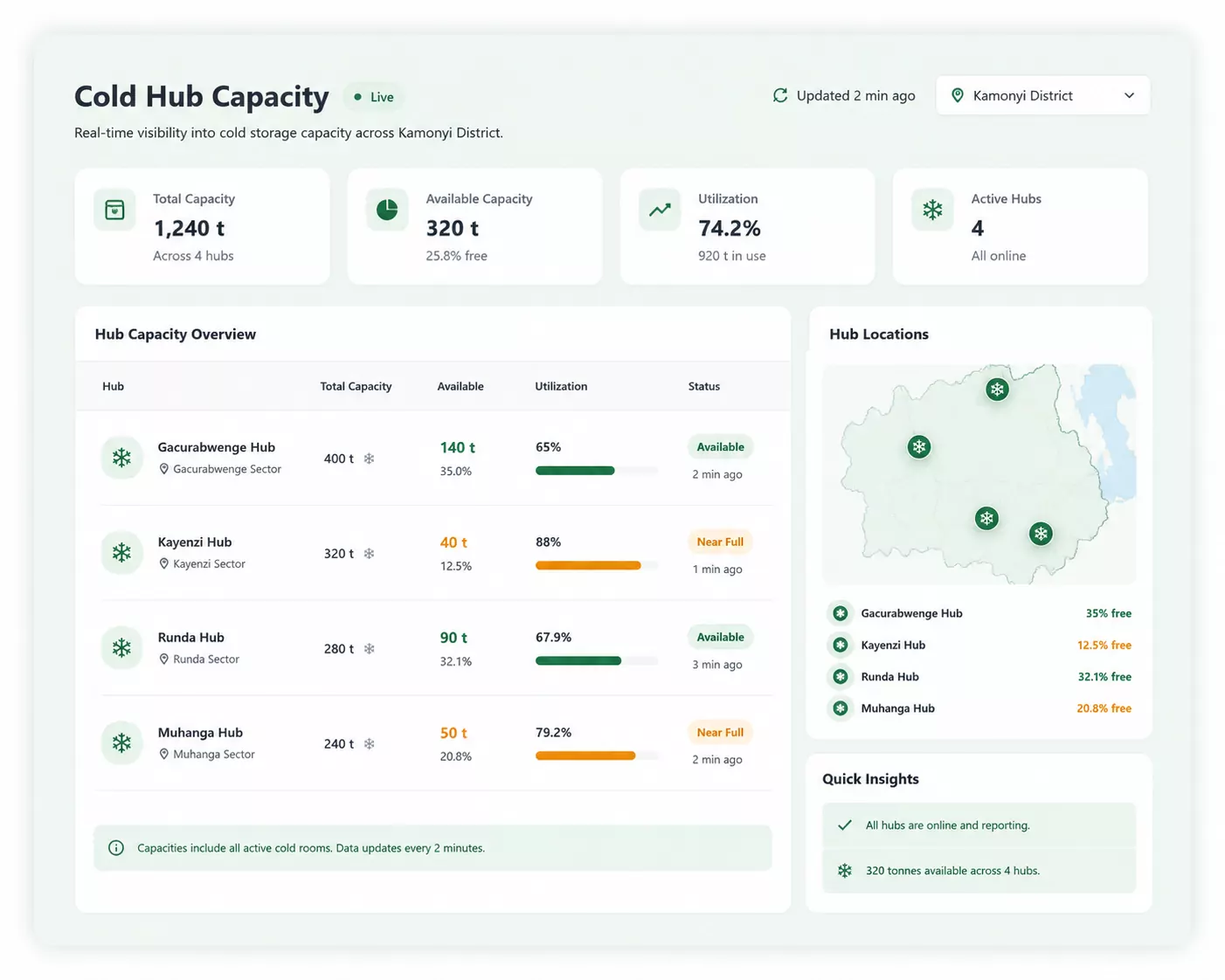
Live cold storage capacity dashboard
PostgreSQL · Live data

Live capacity tracking

Cold hubs publish the space they truly have free, so tomatoes are never sent where they can't be stored.
  • Real capacity
  • Operator-updated
  • No overbooking
Coordination engine grouping farmers to trucks and hubs
Coordination Engine · FastAPI

Grouped transport matching

Nearby farmers are clustered into full, efficient truck trips instead of scattered half-empty runs. Oldest harvests first.
  • Clustering
  • FEFO
  • Reserved
SMS pickup confirmation on a phone
Africa's Talking · SMS

Farmer SMS alerts

Pickup confirmations and storage updates reach farmers by SMS — no dashboard, no login required.
  • Pickup confirmed
  • Storage allocated
  • No login
Flutterwave payment settlement
Flutterwave · Payments

Flutterwave payments

When a trip is created, farmers settle transport and storage fees through a secure Flutterwave flow.
  • Pays transport
  • Pays storage
  • Traceable
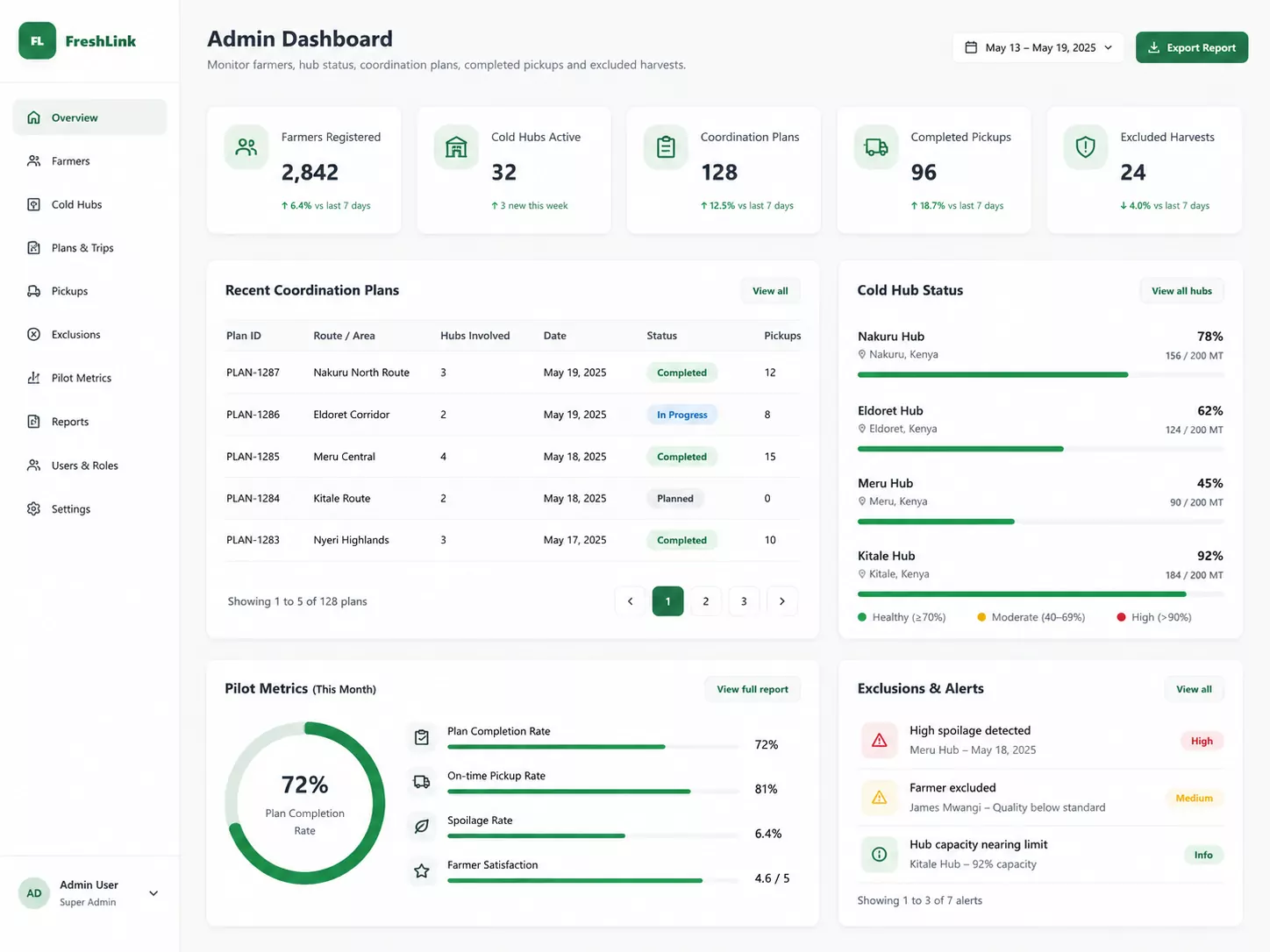
Admin dashboard overview
Web Dashboard · Admin

Admin dashboard

Monitor farmers, hub status, coordination plans, completed pickups and excluded harvests in one view.

  • Plans & trips
  • Exclusions
  • Metrics

For each user

Dashboards for operators, USSD & SMS for farmers.

Farmers

  • No login needed
  • Report by USSD
  • Update or cancel
  • SMS confirmations
  • Storage & time details

Hub Operator

  • Update capacity
  • View allocations
  • Set operating status
  • Confirm arrivals
Register a hub →

Truck Provider

  • Post availability
  • View grouped pickups
  • Follow routes
  • Update trip status
Register a truck →

Admin

  • Register farmers
  • Capture forecasts
  • Review plans
  • Track matches
  • Monitor metrics

Pilot context

Designed for Kamonyi District, Rwanda.

The prototype focuses on smallholder tomato farmers in Kamonyi, coordinating farmers, cold-storage operators and transport providers — anchored by the Munyax-Eco solar cold room.

10–15tomato farmers registered
5–7hubs & transport providers
6 weekspilot evaluation window
USSD · SMS · Webphone for farmers, dashboards for operators

Ready to coordinate the next tomato harvest?

Register a cold hub or a truck and join the Kamonyi pilot.